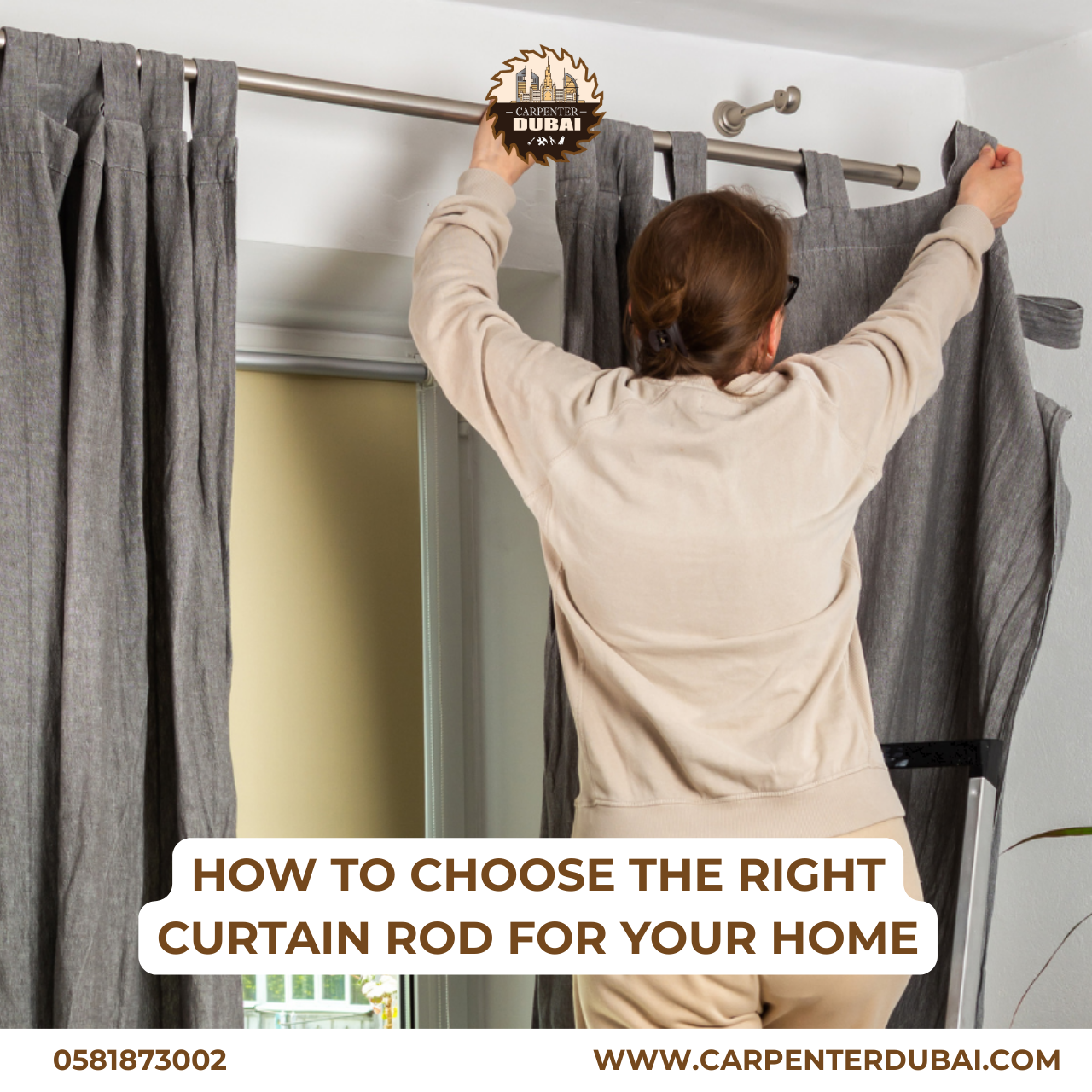
If the curtain rod is already in the right place, changing how the panels hang can be a smaller job than replacing the whole setup. Start by measuring the thickest part of the rod that the rings will actually travel over. Then check how the rings attach to your panels and where the hem will land. These three checks help you avoid buying a set that fits at one end of the rod but catches halfway across the window.
Measure the rod where the rings will travel
Measure straight across the outside of the rod. A caliper is handy, but a ruler held square to the exposed end works if there is room to see both edges. Leave the decorative finial out of this measurement. If the rod telescopes, measure both tubes separately. The size on the original package may describe the rod with a single number, while the outer tube and the step where the tubes overlap feel different to a ring carrying fabric.
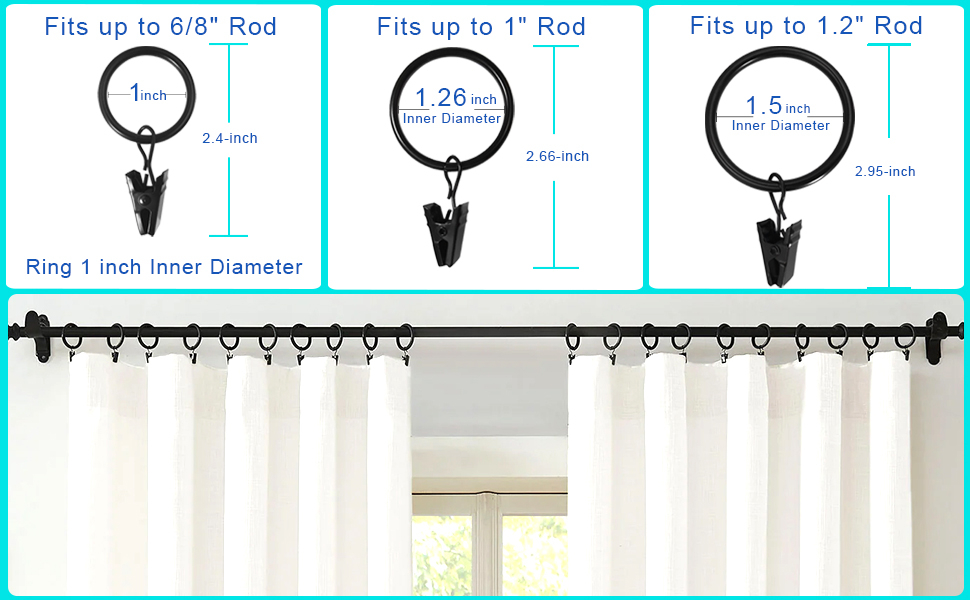
On your shopping list, write down the largest diameter in inches and mark where you measured it. Look for the ring’s clear inside diameter or a listing that explicitly gives the maximum rod diameter it fits. A ring’s outside diameter tells you how big it looks and can leave the actual opening unclear. IKEA’s US listing for its SYRLIG rings advises choosing a ring diameter greater than the rod diameter so the curtain pulls easily. [3] IKEA’s SYRLIG size guidance.
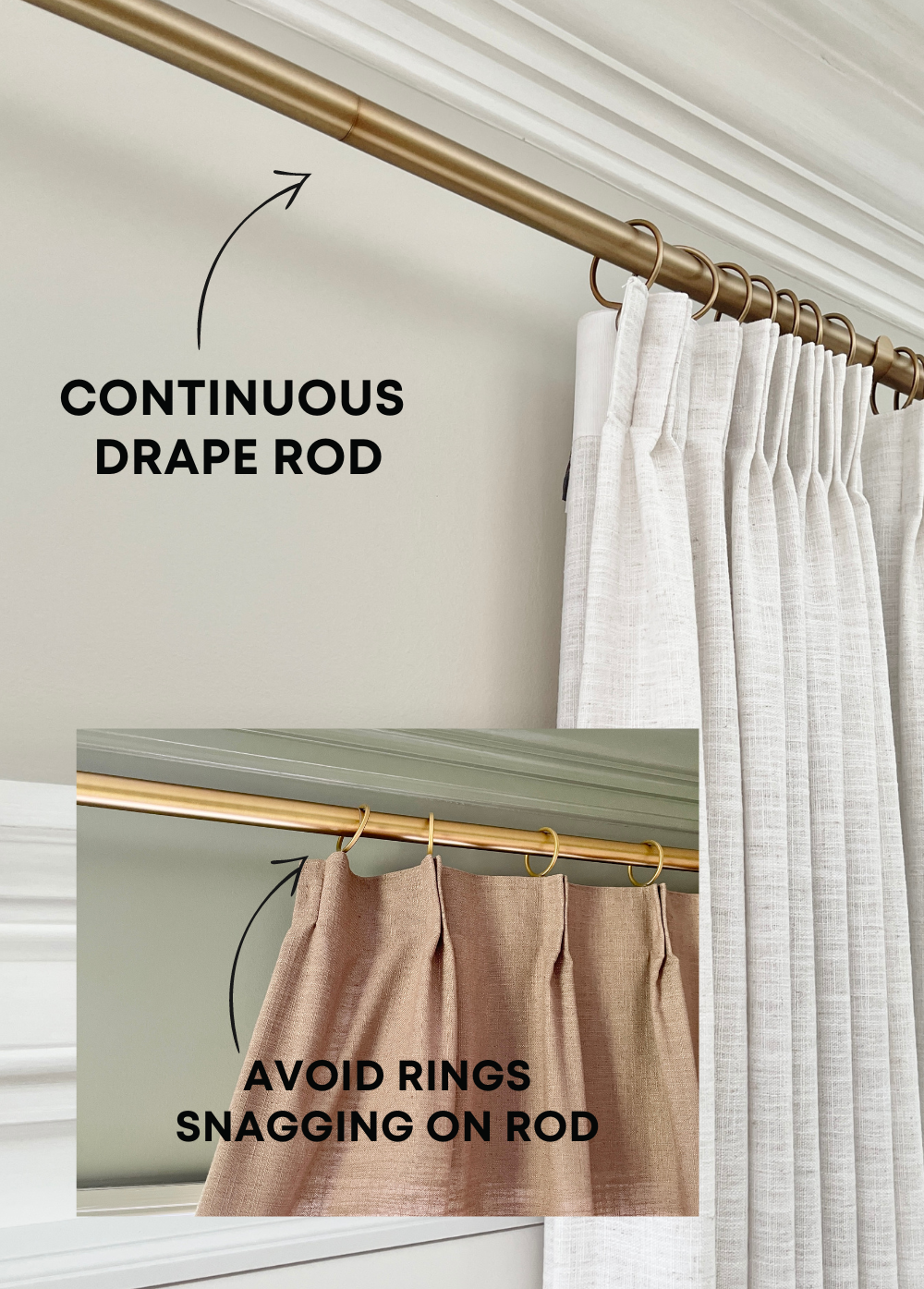
For example, if the widest tube measures 1 inch and a ring has a 1¼-inch clear opening, the difference across the two diameters is ¼ inch. Use that calculation to compare products. The trial on your actual rod will tell you whether the joint is smooth enough. Hang a panel on a small set of rings and draw it past the joint in both directions before buying the rest. A ring can tilt under the pull of the fabric and snag where it slid freely while empty.
Check the finial, the center bracket, and the wall
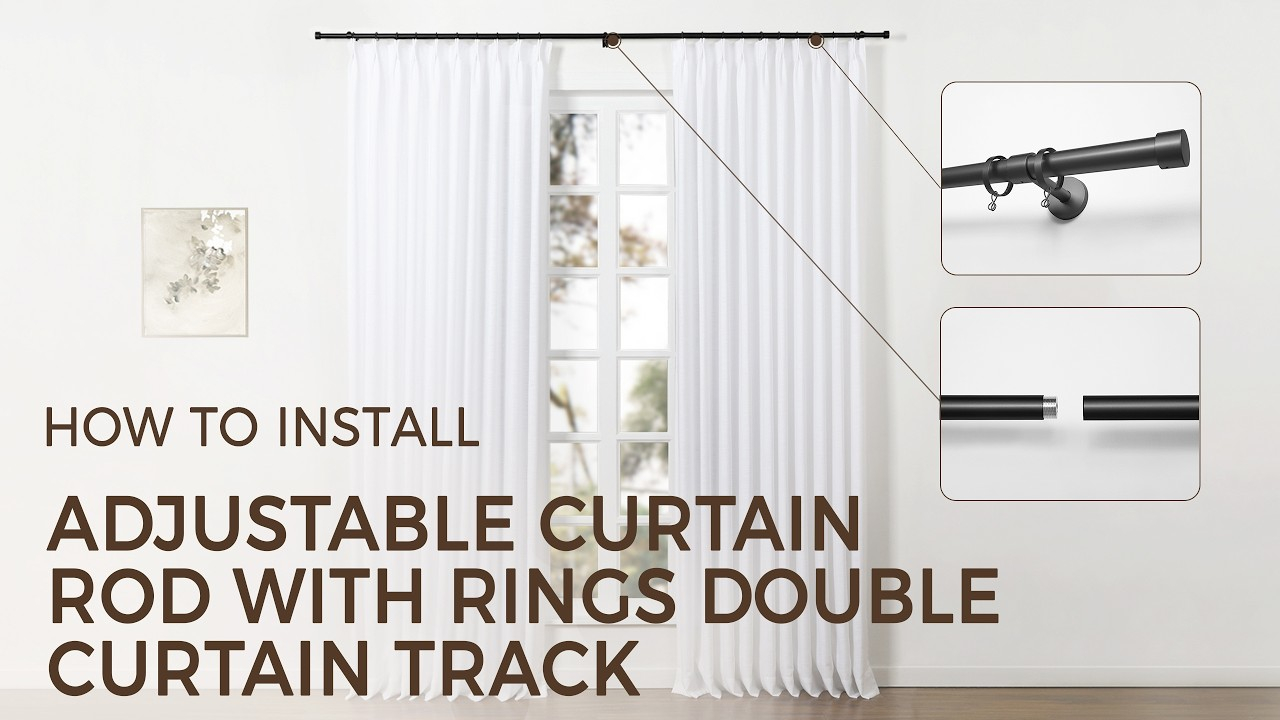
Closed rings need an accessible end of the rod. Inspect how the finial or end cap comes off and how the rod is held by its brackets. If the rod must be lifted, take the panels down first and check the rod’s instructions. While the rod is bare, trace the path each panel needs to travel. A typical closed ring stops at a fixed center support. On a two-panel setup, place the rings for each panel on its own side before putting the rod back.
If you need one panel to travel past a support, check whether your hardware system offers compatible bypass rings and brackets or a track made for that movement. Keep the support the rod manufacturer specifies. Also look at the space behind the rod. A deeper ring or heavier panel header can brush against the wall, casing, or the handle on a nearby window. Use one ring with the curtain attached to check those spots while the panel is both open and closed.
Match the attachment to the curtain header
Clip rings are a straightforward choice for a flat top edge that the clip can grip securely. Hook rings have a small eye that accepts a separate drapery hook, such as one fitted into compatible heading tape or a pleat. Examine the back of the existing panel to see which attachment it was made for. A thick hem may hold a clip partly open, and a delicate fabric can show a mark from the jaws. Try a clip on an inconspicuous part of the header before committing to a full set.
Follow the published fit and load guidance for the rings, rod, and supports. Account for the weight of any lining, and confirm whether a stated limit applies to a ring, a pack, or the complete rod. Umbra’s hardware guide describes its clip rings as an option for light to medium weight panels and gives different maximum rod diameters for its small and large sizes. [1] Umbra’s curtain hardware guide.
Check the hem and test one panel
An added clip can lower the top of the fabric compared with the way a rod pocket hangs. A hook attached farther down a curtain header can change the finished drop in a different way. Measure from the installed rod to the intended hem position, then hang one panel with the actual hardware and measure again. Look at where the fabric sits relative to the floor, sill, or furniture underneath. If rod height is still open to change, see the site’s guide to placing curtains higher in a dining room.
For flat panels without preset attachment points, count and space the rings so the ends sit where you want them and the top edge hangs evenly. On a pleated panel, use its existing hook positions and follow the panel maker’s instructions. Close the panel all the way and look for sag between attachments, then stack it back to see how much glass it covers. Test movement past the widest tube and joint with the full panel in place. Once the rings slide, the hem clears, and the header stays secure, record the ring size, attachment style, and count so you can order a matching set for the other panel.