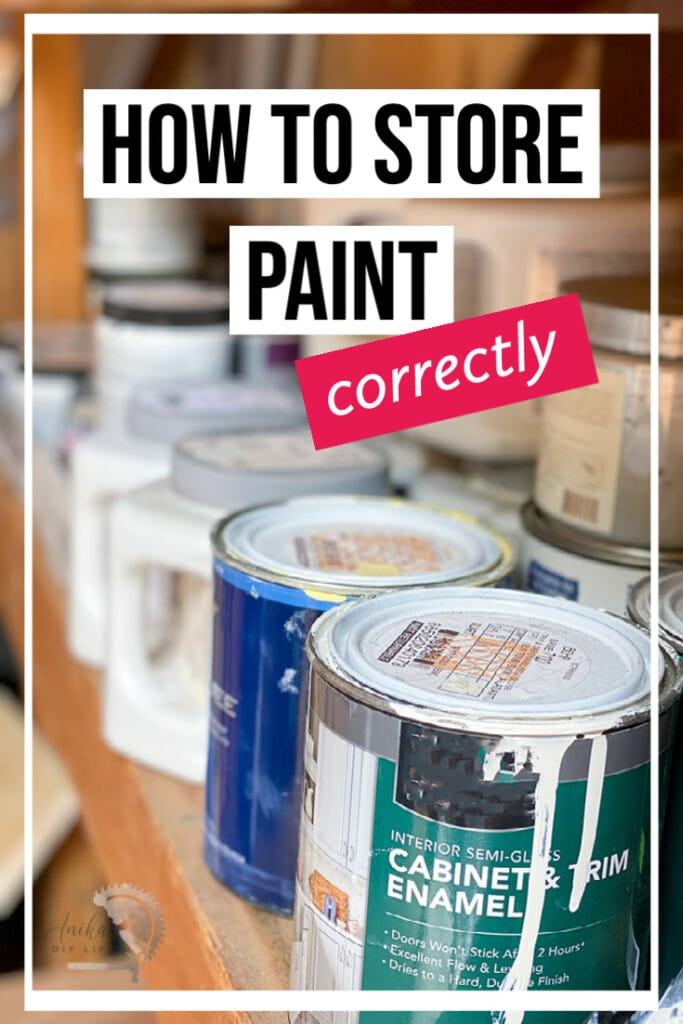
To store leftover latex paint, keep the product identifiable, clean the container’s sealing surfaces, close it securely, and choose a dry location that meets the manufacturer’s storage instructions. The job is more specific than putting a half-used can on a garage shelf and hoping it will still work next year.
This guide focuses on water-based architectural paint kept after a home project in the United States. “Latex” on a familiar paint can is not permission to ignore its label. Follow the actual product’s handling and storage directions; use a separate plan for coatings with different requirements. No storage method here guarantees a particular shelf life or an invisible future touch-up.
Decide what you are keeping before closing the can
Read the original label and confirm which product remains in the container. Keep different colors and products separate. If the can’s identity is uncertain, preserve whatever label and purchase information you have and ask the manufacturer or local waste program how to handle it, rather than turning an unknown mixture into a named touch-up supply.
While painting, reduce the time the main container stands open. PaintCare recommends pouring paint into a working tray so the original can can be closed during the job, reducing exposure to air that can dry the paint.[2] This habit also gives you a clear distinction between the identified original supply and the material currently being used.
Before sealing, look at the lid and container as parts of the storage system. A distorted lid, damaged rim, or leaking container needs attention; labeling alone cannot compensate for a poor closure. If you cannot reseal the original package, ask the paint manufacturer about a suitable replacement container and the waste program about any effect on later acceptance.
Clean the rim and reseal without damaging the lid
PaintCare advises opening a paint can with a paint key instead of an ordinary screwdriver because a screwdriver can bend or distort the lid and make it difficult to close again.[2] Keep the appropriate opener with your painting supplies so the next project does not begin by damaging the closure.
Paint left in the rim can interfere with a tight seal. Wipe the rim regularly while working and before replacing the lid. If dried paint has accumulated there, PaintCare says to take care not to drop loosened material into the paint while removing it.[2] Follow the product’s handling instructions while doing this work.
For closing a metal paint can, PaintCare recommends tapping the lid with a rubber mallet rather than pounding it with a hammer. Where a hammer is used, its guide describes placing wood or a book between the hammer and lid and tapping carefully.[2] Use the container’s own closure instructions when the package has a different design.
Do not treat upside-down storage as an essential sealing step. PaintCare states that turning the can over is unnecessary when the lid is tight and recommends checking the closure instead.[2] Make that check before moving the container to its storage location.
Choose the location from the label, not available shelf space
Read the storage requirements on the paint you own. PaintCare notes that water-based paint labels normally say to keep the product from freezing.[2] A location that becomes freezing cold is therefore a condition to evaluate, even if it is convenient and out of the way.
Keep the container dry. PaintCare explains that wet cans can rust and lose their labels, that even plastic cans may have metal lids that rust, and that rust can contaminate the paint.[2] Inspect the proposed shelf for dampness instead of judging the space only by whether another can fits there.
A practical storage record can include the manufacturer’s stated conditions, the chosen location, and the date you checked it. If you do not know whether that location stays within the product’s requirements through the year, resolve that uncertainty before using it for long-term storage. This is a way to make the decision traceable, not a substitute for the label.
For example, an unheated shed might provide plenty of shelf space while leaving the freezing question unanswered. A damp corner can raise a different problem even when its temperature seems suitable. Compare each candidate location with all of the product’s instructions rather than adopting a universal “garage” or “basement” rule.
Preserve the original label and add a useful inventory note
Keep the manufacturer’s printed label readable. PaintCare recommends noting when and where paint was purchased and describing the room or wall where it was used. It also notes that its recycling sites accept leftover paint only in original containers with the original manufacturer’s printed label.[2] A small unmarked jar may simplify a shelf while complicating identification and future recycling.
Add your own record without covering product instructions. Useful fields include the room and surface, product name, color information, date opened, and storage location. Our separate room-by-room paint color checklist explains how to connect that information to the walls and trim. Here, the priority is keeping the identified container properly closed and stored.
Mark the inventory when paint is used up or transferred into a disposal process. A photograph of a can that no longer exists should not remain listed as available touch-up stock. Retain the product history separately from the current storage inventory so the two records answer different questions.
Reassess condition before planning another paint job
Do not judge usable life from the calendar alone. PaintCare explains that repeated freezing and thawing worsens water-based paint and that paint remaining lumpy rather than becoming smooth when stirred is spoiled.[2] If a stored product has been exposed to questionable conditions, consult its manufacturer about that product rather than assuming every water-based coating responds identically.
Storage condition and touch-up appearance are separate decisions. Even a container you decide is suitable to use is not a promise that the finished repair will disappear into an older wall. Keep the original project information available, follow the product’s application directions, and evaluate a small appropriate test before planning visible work.
Use a verified local route when you no longer need it
PaintCare’s FAQ says to secure lids, prevent leaks, retain original containers and labels, and avoid mixing paints before taking accepted material to a participating drop-off site. It also advises calling ahead to confirm hours and availability.[3] Do not assume every paint retailer participates or that a particular location can accept your material today.
In areas outside PaintCare programs, its FAQ points readers toward local household hazardous waste services or the local government waste authority.[3] Ask that service about your specific product and container condition. Keep disposal rules local instead of borrowing a trash or drain instruction from another state.
Finish with one clear outcome for each container: an identified product stored under its own instructions, a question awaiting the manufacturer or waste service, or a completed handoff through an accepted local route. That is a more useful result than an expanding shelf of sealed cans whose contents and condition nobody can explain.
Sources
- [2] Store Right | PaintCare storage tips for leftover paint
- [3] Get the Answers to PaintCare's Frequently Asked Questions