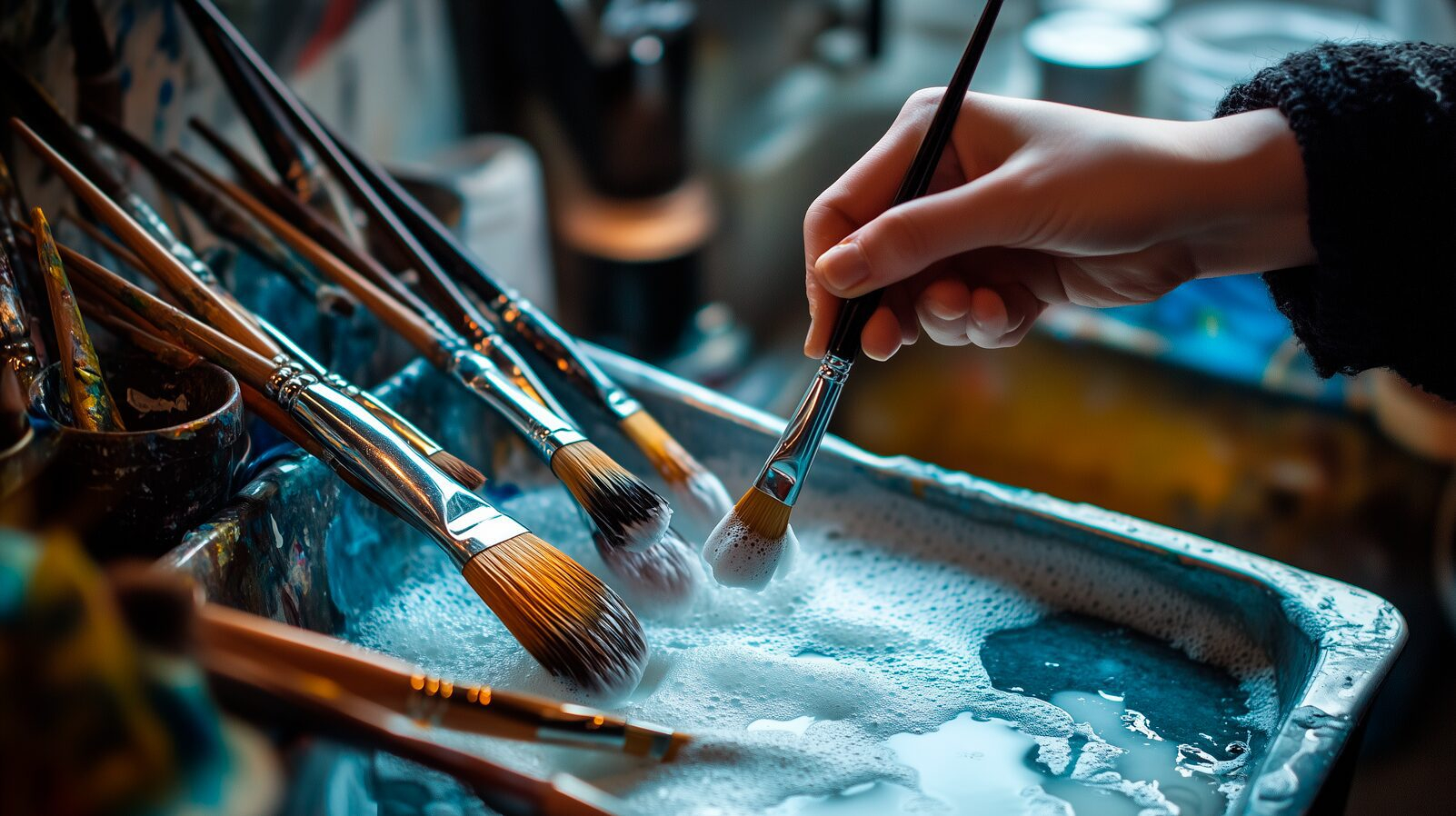
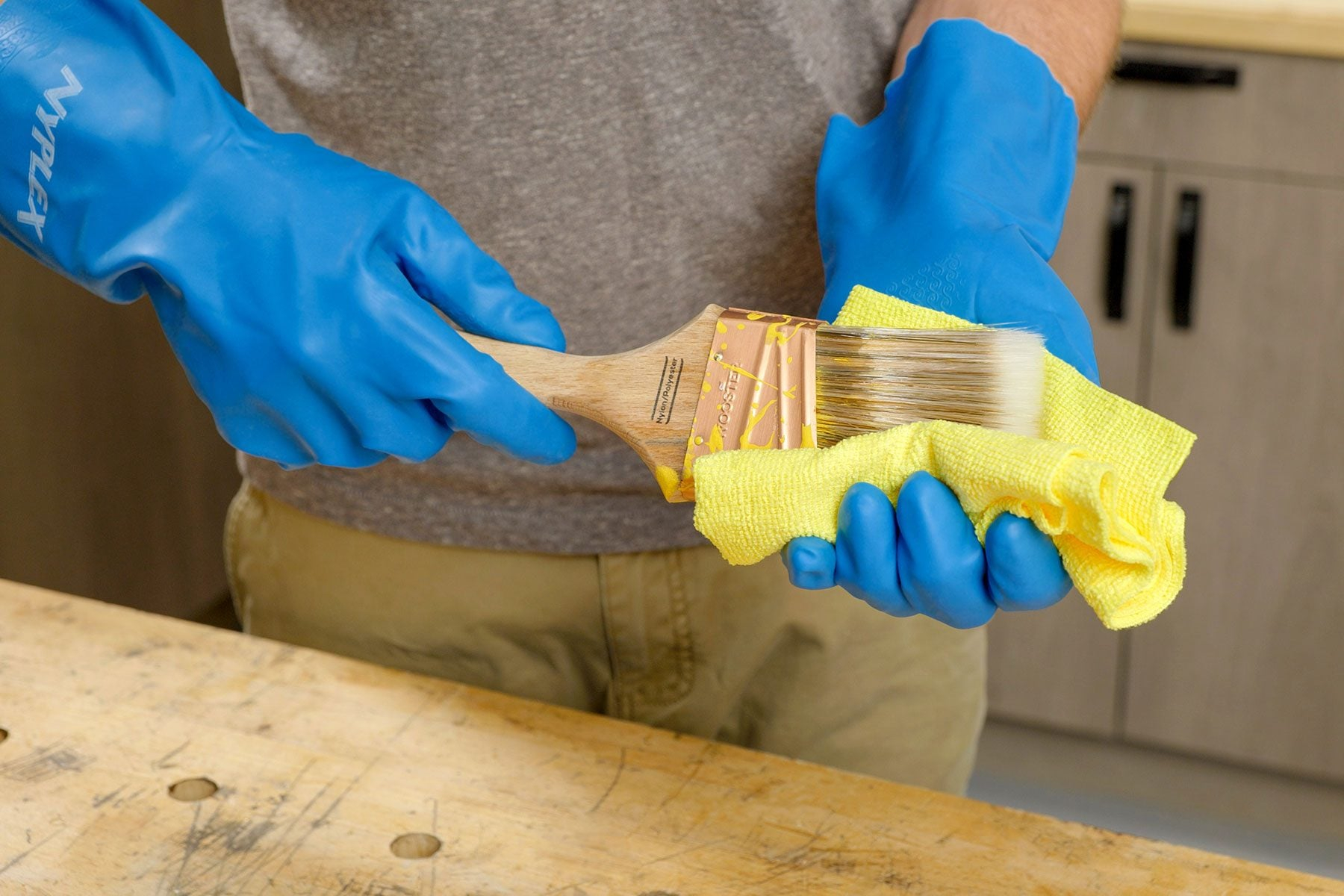
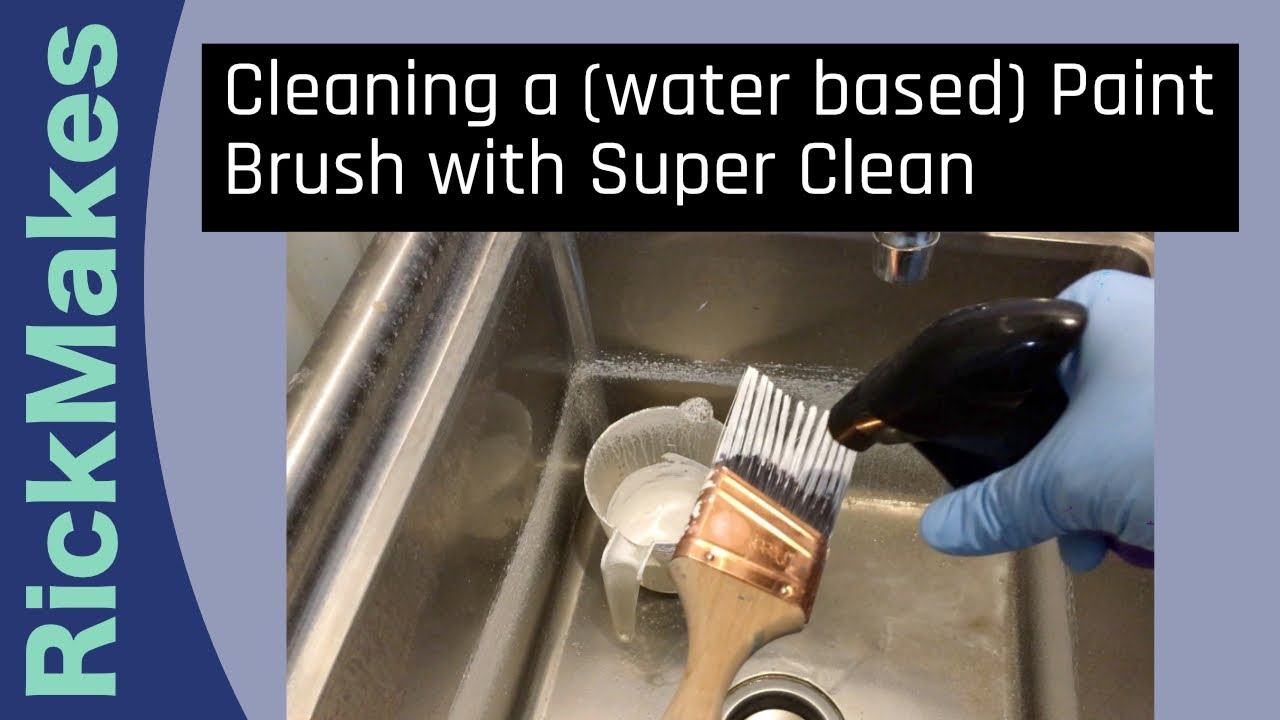
To clean a synthetic paintbrush after using water-based paint, wash it promptly with mild soap and warm water, rinse the bristles, straighten them with a brush comb, and dry the brush in its protective keeper. The important detail is keeping paint out of the bristle base without leaving the whole brush standing in water.
This guide covers ordinary cleanup after a home decorating project with latex or another coating whose label specifies soap-and-water cleanup. It does not provide a solvent recipe for oil-based paint or promise to rescue a brush that has hardened throughout. Read both the coating label and the brush maker’s directions before choosing a cleaner.
Check the coating and brush before you wash
Start with the paint can rather than the appearance of the wet paint. A trim coating and a wall coating may look similar on a brush while requiring different cleanup methods. Find the cleanup instructions and keep the container nearby until you finish. If the label calls for a solvent, set this water-based procedure aside and follow that product’s directions.
Check the brush packaging too. In its painting FAQs, Purdy generally recommends synthetic filaments for water-based or latex paint and natural bristles for oil-based coatings. This article assumes you used a compatible synthetic brush. Keep the original keeper, the shaped cover supplied with many brushes, instead of throwing it away with the packaging.
Gather mild soap or detergent, warm water, a suitable cleaning container, a clean cloth, and a paintbrush comb if available. Arrange the cleanup area before the final coat so you can begin promptly instead of letting a loaded brush sit while you put the room back together.
Remove excess paint and begin cleaning promptly
Finish the useful painting work, then gently work surplus coating out of the brush against the appropriate container edge. Avoid crushing the tips or bending the bristles sharply. The aim is to remove paint that would otherwise turn the first wash into a thick, difficult mixture, not to squeeze the brush completely dry.
Purdy’s paint care and cleanup instructions call for washing a synthetic brush immediately after use with soap or mild detergent and warm water. Begin while the coating is still workable. A brush that looks reasonably clean at its tips may still hold paint deeper inside the bundle.
For a practical home setup, keep the wash container on a protected surface and keep paint waste contained while you check your local disposal instructions. Water-based cleanup does not automatically settle where leftover paint or wash water may be discarded. Follow the coating label and your local household waste guidance rather than assuming every drain is an acceptable destination.
Work soap through the bristles without soaking the ferrule
The ferrule is the metal band that holds the bristles against the handle. Purdy specifically warns against soaking the brush or letting water seep into the base of the filaments and into that band. Treat washing as an active task: work soap through the bristles, remove loosened paint, and rinse, rather than leaving the brush in a bucket while you do something else.
Use gentle movements that follow the shape of the bristle bundle. Pay attention to paint caught farther up the working portion, not just the colorful ends. If the rinse still carries obvious coating, repeat the wash and rinse instead of declaring the brush finished because its outside looks clean. There is no useful universal number of rinses; judge the actual condition.
Do not interpret a stubborn area as a reason to fill a container above the ferrule or leave the handle submerged overnight. That changes the method from washing to soaking. If the instructions for your particular brush differ, use those directions and keep the cleaner compatible with the coating.
Use a brush comb rather than a wire brush
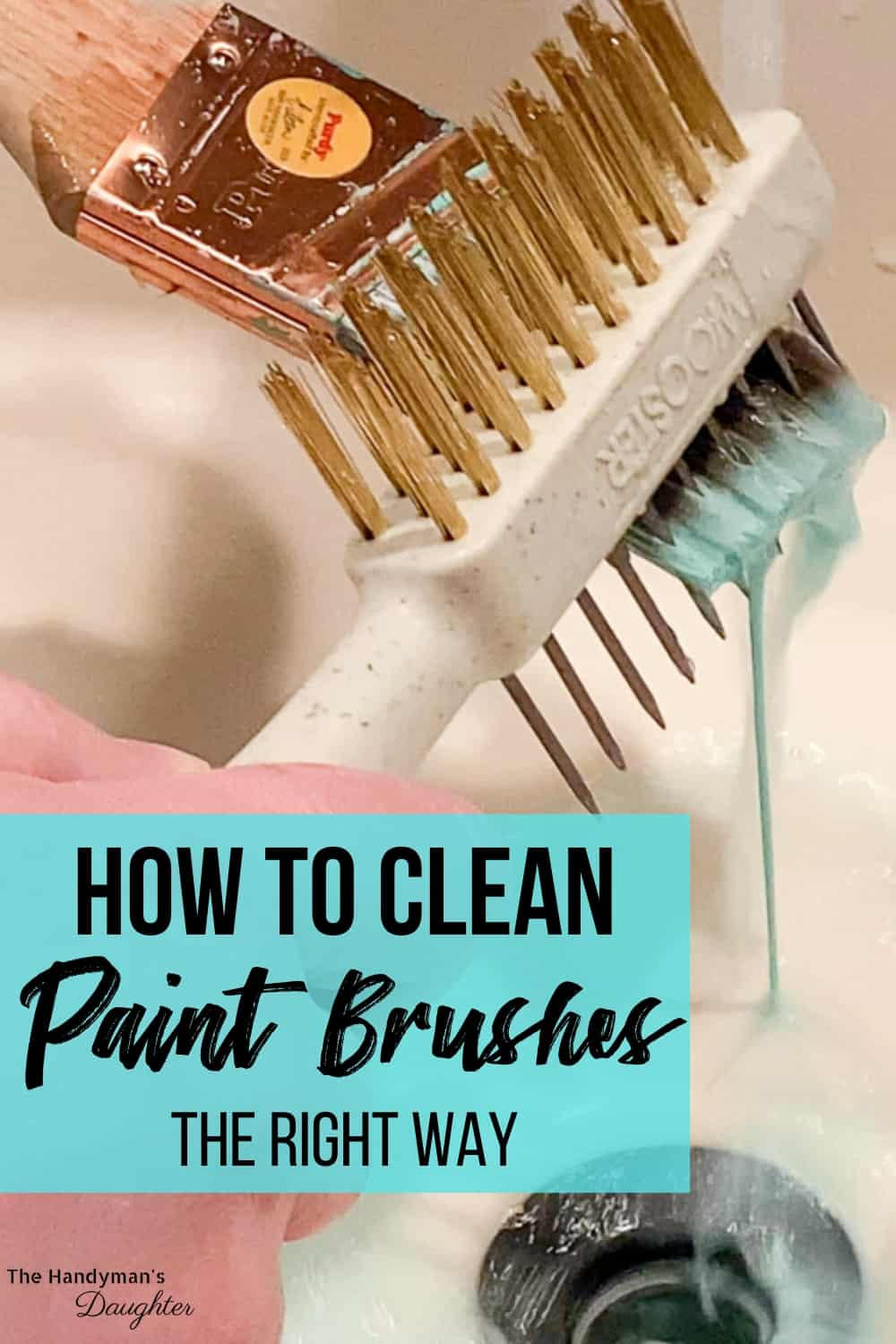
After loosening the paint, a purpose-made brush comb can help straighten the bristles and work through the bundle. Move carefully and stop if it catches on a hard deposit. Pulling aggressively through a solid lump is different from combing a flexible, cleaned brush.
Purdy advises against using a wire brush because it can damage the split ends of the bristles. A tool meant for scrubbing metal is not interchangeable with a paintbrush comb. Keep the goal specific: remove remaining coating while preserving the brush’s original shape.
Rinse again after combing if more paint is released. Look across both faces and the narrow edges for stiff sections, stuck-together tips, or a distorted profile. A brush used for cutting in around trim needs an orderly edge; merely getting the rinse water clearer does not confirm that the bundle is ready for the next project.
Handle partially dried paint without an overnight soak
A delayed cleanup does not always mean the entire brush is ruined. Purdy says dried latex paint can be softened with hot soapy water, but stresses working quickly and avoiding a long soak. Follow the brush maker’s directions, handle hot water carefully, and work on the affected bristles rather than immersing the whole brush indefinitely.
Keep the distinction between a small dried deposit and a fully hardened brush. If a short, compatible cleaning attempt does not restore flexibility, stop and consult the manufacturer before trying a stronger product. Mixing cleaners or improvising a solvent treatment is outside this basic procedure.
Before storing the brush, make a final inspection for remaining stiff areas. Record what coating caused the problem if you need to seek advice later. The product name and cleanup instructions are more useful than a description such as white trim paint.
Reshape, protect, and dry the brush for its next use
Once the bristles are clean, gently restore their original outline and use the protective keeper as directed. Purdy recommends straightening the bristles, placing the brush in its keeper, and hanging it to dry. Avoid leaving the brush balanced on its tips in a container, where the working edge can be pressed into an unwanted shape.
Purdy also discourages refrigerator storage as a way to keep a used brush from drying. For a completed job, plan on proper cleaning and drying rather than putting a paint-loaded brush beside food. Store the cleaned brush where the keeper and bristles can remain protected.
If the room was painted with both tools, use the separate guide to cleaning water-based paint rollers for the cover and frame. A roller sleeve has different construction, so its cleanup should not replace the brush-specific attention to the ferrule, bristle shape, and keeper. Finish by checking that the brush is clean, flexible, and properly supported for drying before you put the painting supplies away.